
Reseller guide
eBay vs Facebook Marketplace: What to Sell Where
eBay is the better home for small, collectible or niche items that are easy to ship, because buyers nationwide search for the items by name. Facebook Marketplace is the better home for big, heavy or common items that buyers pick up locally. Many resellers use both and match each item to a channel.
People ask me all the time whether to sell on eBay or Facebook Marketplace. My honest answer is that I use both, for different things. eBay and Marketplace are built for different buyers and different kinds of items. Once you see the difference between the two, deciding where an item should go gets much easier.
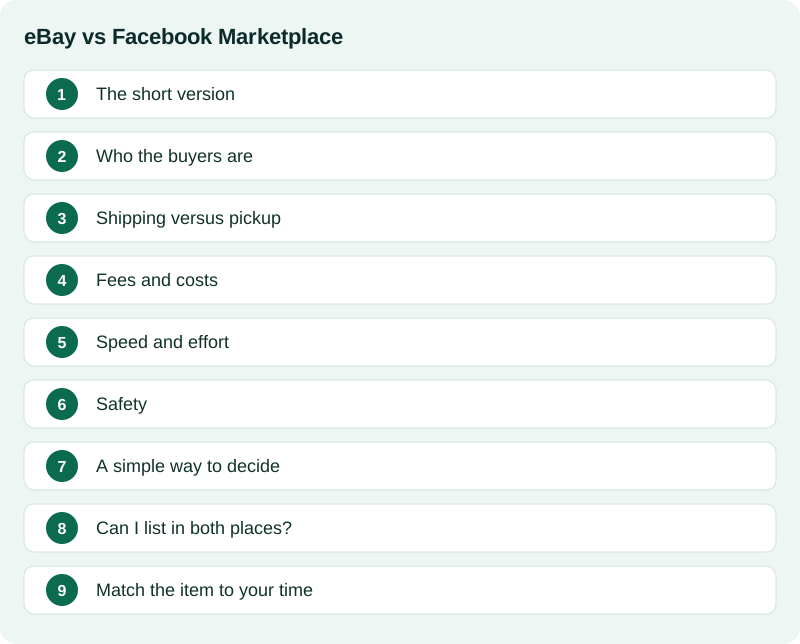
The short version
- eBay is built for shipping items to buyers anywhere. eBay works well for small, collectible, niche or hard-to-find things.
- Facebook Marketplace is built for local buying. Marketplace works well for big, heavy or common items that people want to pick up nearby.
The rule of thumb is simple: ship small, niche items on eBay and sell bulky ones locally. The rest of this guide explains the reasons and the exceptions.
Who the buyers are
On eBay, buyers often search for something specific. The search might be for a particular model, a certain edition or a missing part. Because the eBay audience is large and spread out, finding the one person who wants an unusual item can be easier.
On Marketplace, buyers are usually browsing nearby and looking for a deal with quick pickup. Local buying works well for everyday items, but your buyer pool is limited to your area, so very niche items can sit.
Shipping versus pickup
Shipping versus pickup is the biggest dividing line. If an item is easy to pack and ship, eBay opens it up to the whole country. If it is large, heavy or fragile, shipping can cost more than the item is worth. A couch, a solid wood dresser or a big exercise machine will usually do better locally, where the buyer comes to you.
Marketplace also offers shipping on some listings, but local pickup is where Marketplace shines. I cover shipping costs in how much to charge for shipping and how to cut the cost.
Fees and costs
eBay charges fees when an item sells, and the amount depends on the category and what you add to the sale. Check eBay's current fee information before you price, because it changes. Facebook Marketplace local pickup listings have generally not carried a selling fee, though terms can change and shipped orders can be treated differently. Check Facebook's current terms.
A lower fee does not always mean you keep more. A common item might sell for less locally, and an item that would have found a specialist buyer on eBay could sit unsold on Marketplace. Compare what you expect to keep, not just the fee.
Speed and effort
Marketplace can be quick. Someone messages, you set a time, and the buyer picks the item up. Marketplace can also be slow in a different way: messages that go nowhere, people who say they are coming and do not show, and haggling over small amounts.
eBay takes more setup. You need good photos, a clear title, item specifics and a plan for packing and shipping. In return, buyers usually pay up front and you have a record of the sale. Many sellers find eBay more predictable once the routine is in place.
Safety
- For local sales, meet in a public place when you can, in the daytime, and bring a friend for larger items.
- Be careful with payment. Be wary of anyone who wants to pay in an unusual way, send you a code, or move the conversation somewhere else.
- On eBay, keep the transaction on eBay. Do not agree to take payment or arrange a sale outside the site.
- Never ship before the payment has actually cleared and the sale is confirmed through the platform.
A simple way to decide
Ask three questions about each item:
- Can I ship it affordably? If not, local is usually better.
- Is it something people search for by name or model? If yes, eBay's reach helps.
- Is it common and cheap? If it is common and low in value, local pickup saves you packing time and shipping hassle.
A few examples from my own thinking, not hard rules: a collectible book, small tool, vintage toy or camera lens is a natural fit for eBay. A bulky bookshelf, a mattress or a box of mixed household items is a natural fit for local.
Can I list in both places?
You can, but be careful. If the same item is listed in two places and sells in both, you have a problem. If you cross-list, remove or end the other listing as soon as one sells, and keep a record of where each item is listed. For high-value items I would rather pick one place first, give it a fair try, and then move it if it does not sell.
A last note on how Listing Ventures AI works, since people ask: for eBay, once you connect your account you can publish straight from the app after you confirm. For Facebook Marketplace, the app prepares the title, price, category and description, and you copy it into Marketplace and tap Publish yourself. Listing Ventures AI never logs into Facebook for you.
Match the item to your time
The best channel is also the one you will actually keep up with. If you have lots of small, shippable items and enjoy the packing routine, eBay may be your main place. If you are clearing a house and have mostly bulky things, Marketplace may do most of the work. Many resellers use both, as I do.
If you are working through a big pile, my storage unit and estate sale guide shows how I sort a big pile before deciding where each item goes.
Fees, rules and features on both platforms change over time. Always check the current terms on eBay and Facebook before you rely on any detail here.
I built Listing Ventures AI to handle both: one set of photos, one drafted listing, ready for eBay or ready to copy into Facebook Marketplace. If that fits how you sell, try it free and see.
Sources
Official pages this guide relies on. Rules and fees change, so check them before you list.
- eBay Help: Selling fees (eBay). Current eBay fees by category.
- Facebook Help Center: About shipping costs on Facebook Marketplace (Meta). How shipping works for items sold with shipping on Marketplace.
- FTC Consumer Advice: Selling stuff online? Here's how to avoid a scam (U.S. Federal Trade Commission). Fake payments and fake check overpayments, and how to avoid them when selling online.